The AI Job Threat Is 5x Bigger Than the Headlines
A few weeks ago I picked apart Anthropic's scary AI jobs chart. The methodology was guesswork: a 2023 study, evaluators who didn't know the occupations they were scoring, and "theoretical capability" that included technology that doesn't exist yet.
MIT built the version that actually matters.
Their Iceberg Index maps 13,000 real, production-ready AI tools against 923 occupations using the same federal skill taxonomy that describes what workers actually do (O*NET), then weights everything by the wage value of that work. No speculation. Just demonstrated capability measured against real economic output.
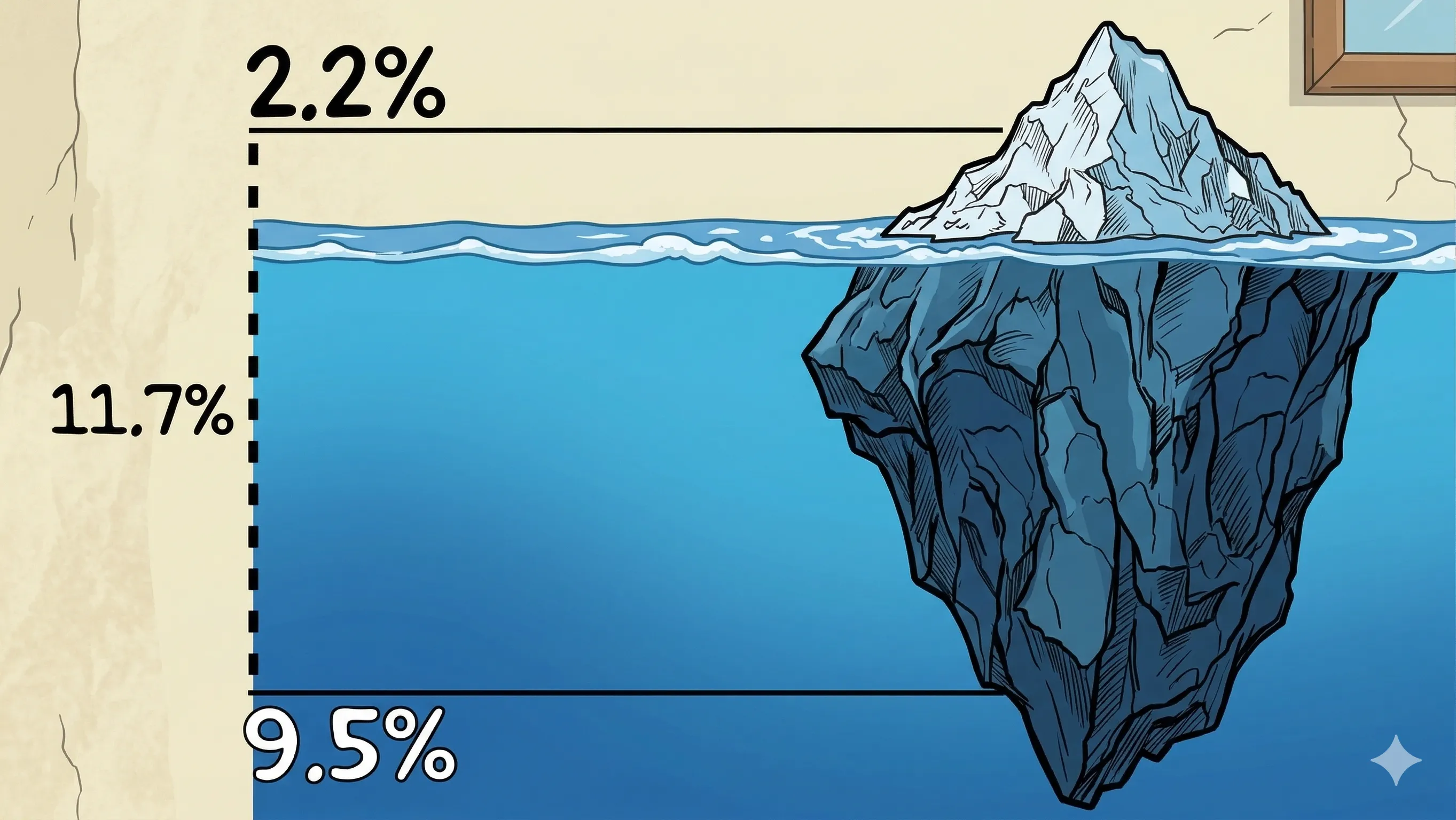
In the tech sector, AI overlaps with about 2.2% of total US labor market wage value. That's the part generating all the headlines. When MIT ran the same analysis across every occupation, the number jumped to 11.7% (roughly $1.2 trillion). Five times larger. The other four-fifths are sitting on a fault line that hasn't produced a single anxious headline.
And the people on that fault line aren't who you'd expect. The most AI-exposed workers earn 47% more than the least exposed and are four times as likely to hold a graduate degree. In plain English: the people whose day is built around reading, writing, analyzing, and summarizing. The people who did exactly what they were told would make them safe.
Here's the part that should worry business owners. Tennessee's tech exposure is 1.3%. Its Iceberg Index is 11.6%. South Dakota and North Carolina score higher than California. The standard economic indicators (GDP, unemployment, per capita income) explain less than 5% of the variation. The tools governments and companies use to plan workforce spending can't even see this.
MIT's data is from late 2025. A survey Epoch AI ran in March 2026 shows nobody's acted on it. Half of American adults used AI in the past week. One in five full-time workers says AI has already replaced parts of their job. But most people are using a $1.2 trillion capability to look things up and rewrite emails.
MIT mapped the fault lines. Almost nobody's looking at them. If you run a business, this is the week to sit down with your team and map what they actually do, skill by skill, against what AI can already handle. Not theoretically. Right now.